A 7-Day Cairo Itinerary for Saudi Travelers
The airport doors open, warm air meets your face, Arabic fills the space around you, and Cairo begins moving before you have fully caught up with it. Horns, minarets, old balconies, glass towers, and sudden glimpses of the Nile all arrive at once.
For a Saudi traveler, the city can feel strangely familiar and completely new at the same time.
That is why the best 7-day Cairo itinerary for Saudi travelers should not feel like a race. Cairo needs room: time to stand quietly beneath the pyramids, wander old streets, drink tea beside the Nile, and let the city become more than a list of attractions.
Travel note: Entry rules, ticket prices, opening hours, and local conditions can change. Check official information again shortly before your trip.
Why Does Cairo Feel So Easy For Saudi Travelers?
Arabic is everywhere, prayer is part of the rhythm of daily life, halal food is widely available, and late evenings feel familiar. That makes the first day easier than in many international destinations.
Saudi passport holders are currently listed among the nationalities eligible to apply for Egypt’s official e-Visa. The official portal advises applying at least seven days before departure and requires a passport valid for at least six months from arrival. Visa2Egypt
The bigger challenge is Cairo itself.
The city is enormous, and traffic can turn a short-looking journey into a long one. The easiest way to enjoy it is to group nearby attractions together instead of crossing the city several times each day.
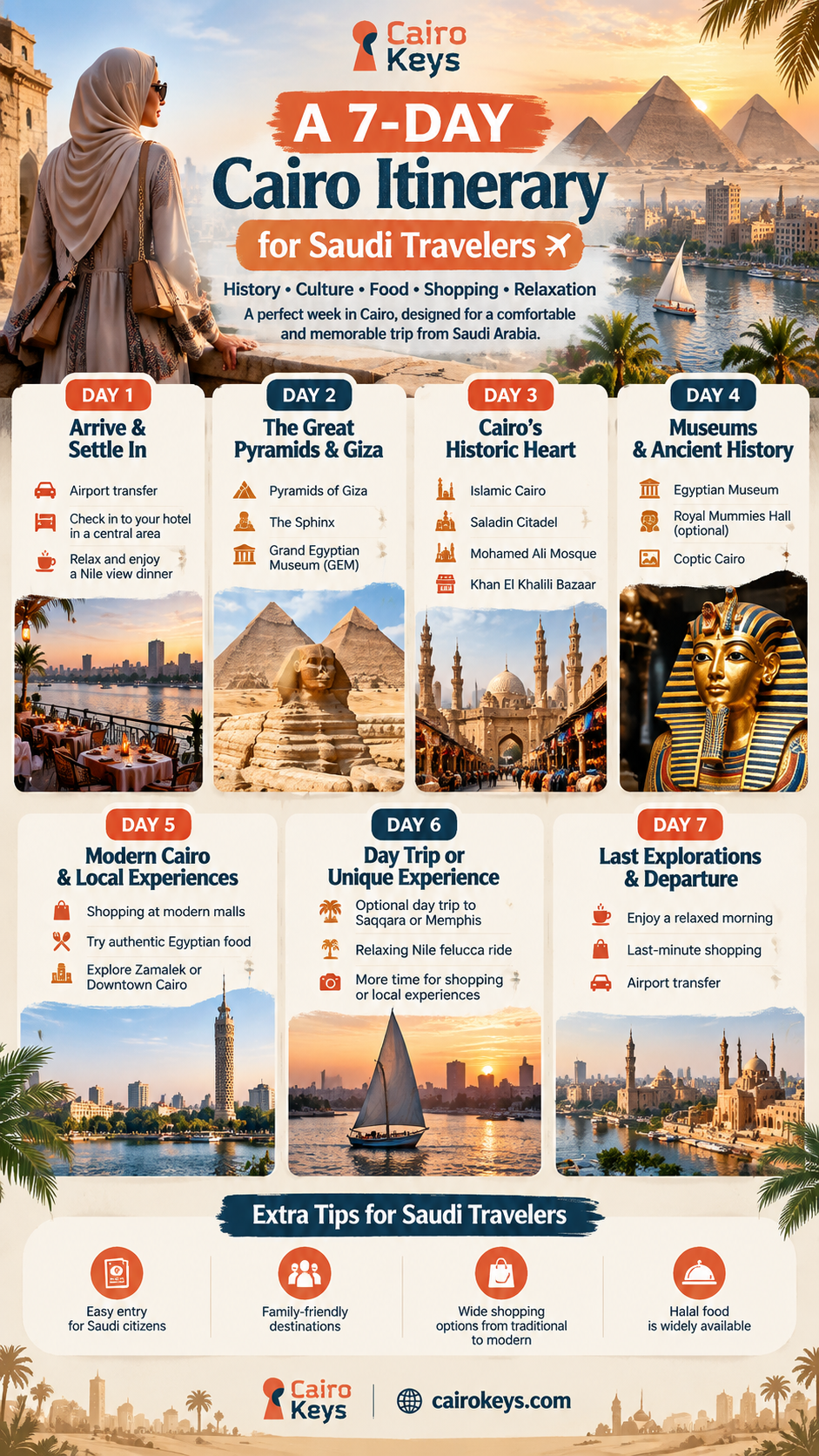
What Does This 7-Day Cairo Itinerary Look Like?
| Day | Main Area | Highlights | Pace |
|---|---|---|---|
| Day 1 | Nile and Zamalek | Arrival, Nile walk, relaxed dinner | Easy |
| Day 2 | Giza | Pyramids, Sphinx, Grand Egyptian Museum | Full |
| Day 3 | Islamic Cairo | Citadel, Al-Muizz, Khan el-Khalili | Full |
| Day 4 | Downtown | Egyptian Museum, Tahrir, Nile | Moderate |
| Day 5 | Old Cairo and Fustat | Religious Complex, NMEC | Moderate |
| Day 6 | Saqqara | Step Pyramid, tombs, optional Memphis | Full |
| Day 7 | Flexible Cairo | Shopping, park, Zamalek, final dinner | Easy |
Keep the structure, but adjust it around your flights, Friday prayer, weather, and your family’s energy.
Day 1: Can You Let Cairo Introduce Itself Slowly?
Travel days take more energy than they seem to. Immigration, luggage, traffic, and check-in can leave everyone tired, especially families traveling with children or older parents.
Choose a base that matches your priorities. Zamalek feels leafy and relaxed. Garden City is central and close to the Nile. Giza works if waking up near the pyramids matters more than easy access to Downtown.
After check-in, keep the evening simple.
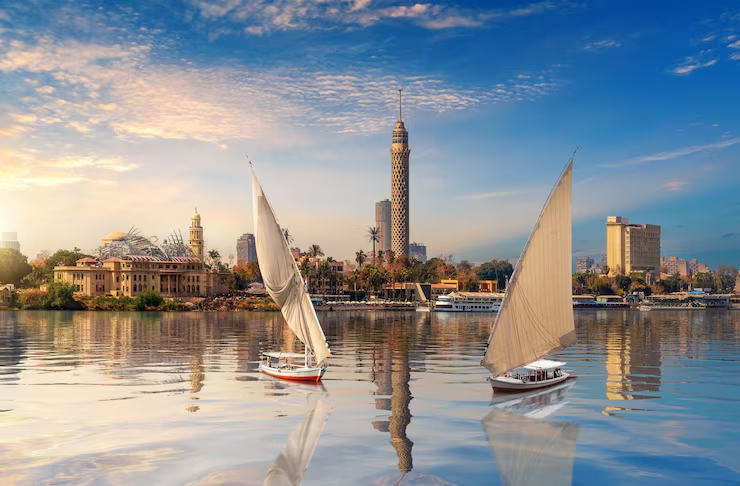
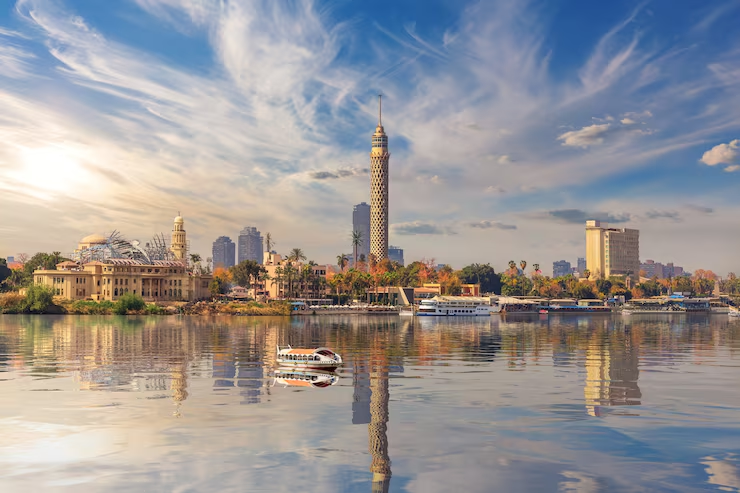
Walk beside the Nile. Sit down for tea or coffee. Have an Egyptian dinner without turning the evening into another sightseeing mission.
If everyone still has energy, add Cairo Tower or a short felucca ride.
The goal is simple: arrive emotionally, not just physically.
Day 2: What Does It Feel Like To Stand Beside 4,500 Years Of History?
Start early at the Giza Plateau.
The pyramids are photographs until you stand beside them. Then scale takes over.
The official listing currently gives daily Giza Plateau visiting hours of 8:00 a.m. to 4:00 p.m. and lists the foreign-adult area ticket at EGP 700. Entry inside individual pyramids costs extra. Egy Monuments
Arrive near opening time if possible. Visit the Great Pyramid area, panoramic viewpoints, the Sphinx, and the Valley Temple without trying to see every corner.
A few things make the morning easier:
- Wear comfortable shoes.
- Carry water and sun protection.
- Agree on the full price before accepting camel, horse, photo, or guide services.
- Leave before exhaustion turns the experience into work.
After lunch, continue to the Grand Egyptian Museum.
This pairing makes sense because both attractions are on the Giza side of the city. You spend more of the day exploring and less of it sitting in traffic.
The museum’s official booking system currently lists an adult admission ticket for Arabs or other nationalities at EGP 1,590. Admission uses a timed online booking. Galleries normally operate from 9:00 a.m. to 6:00 p.m., with extended hours until 9:00 p.m. on Wednesdays and Saturdays.
Give the museum around three hours.
You have already stood beside the monuments. Now you get to meet the objects, beliefs, craftsmanship, and stories that once filled that world.
Day 3: Where Does Islamic Cairo Feel Most Alive?
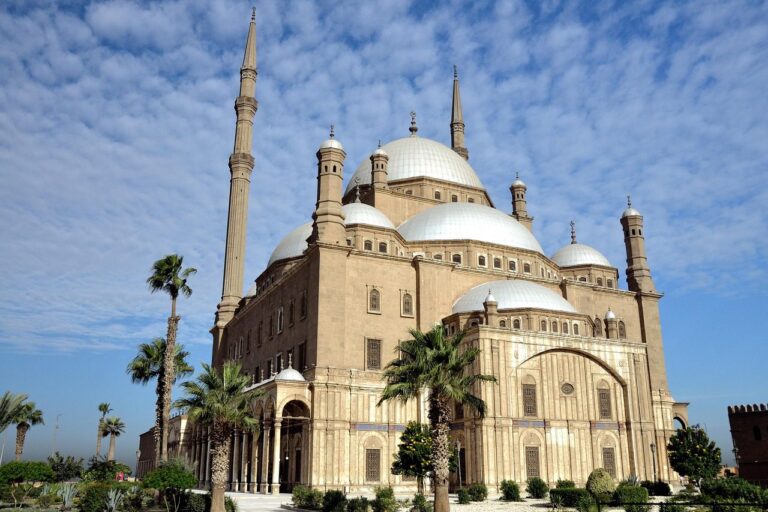
Begin at the Citadel of Salah al-Din.
From its elevated position, Cairo spreads below you in layers, while the Mosque of Muhammad Ali dominates the skyline.
The Citadel is currently listed as open from 8:00 a.m. to 5:00 p.m., with a foreign-adult area ticket of EGP 550.
Dress respectfully for mosque visits. Lightweight modest clothing works well, and women may find it useful to carry a scarf.
Then continue into historic Islamic Cairo.
Walk Al-Muizz Street. Visit Al-Azhar or Al-Hussein if they fit naturally into your route. Do not rush from mosque to mosque simply because a map tells you they are nearby.
This part of Cairo deserves walking.
Finish at Khan el-Khalili. Cairo’s official tourism information describes the market as more than 600 years old, but it still feels alive rather than preserved behind museum glass.
Come before sunset, then stay as the lights begin glowing above the lanes.
Buy what you genuinely like.
Bargain with a smile.
And leave time for tea.
Day 4: Can Downtown Cairo Show You Another Egypt?
Cairo is not only pyramids and medieval streets.
Downtown has its own personality: grand old façades, crowded pavements, cafés, bookshops, government buildings, and streets that seem to collect stories.
Begin at the Egyptian Museum in Tahrir Square.
Current official information lists opening hours from 9:00 a.m. to 5:00 p.m., with the ticket window closing at 4:00 p.m. The listed foreign-adult ticket is EGP 550.
Afterward, walk rather than immediately getting into a car.
See Tahrir Square. Wander toward Talaat Harb. Stop for coffee. Look up at the buildings instead of only at your phone.
Later, move toward the Nile for sunset or dinner.
This day matters because Downtown lets you see Cairo as a living capital rather than only as a collection of ancient sites.
Day 5: What Happens When Cairo’s Civilizations Meet?
Spend the morning in Old Cairo, often called Coptic Cairo or the Religious Complex area.
Churches, a synagogue, and the Mosque of Amr Ibn al-As are found within a relatively compact part of the city.
You do not need to turn the morning into a history exam.
Notice the architecture. Listen. Look at how the streets change. Give yourself time to understand that Cairo’s story has never belonged to only one period or community.
Then continue to the National Museum of Egyptian Civilization in Fustat.
The museum connects different eras of Egyptian history and includes the Royal Mummies Hall. Current official information lists regular hours of 9:00 a.m. to 5:00 p.m. and a foreign-adult admission price of EGP 550. Friday also has an evening period listed from 6:00 p.m. to 9:00 p.m.
Keep the evening light.
After five days, museum fatigue is real.
Rest is part of a good itinerary too.
Day 6: Is Saqqara Worth Leaving Central Cairo For?
Yes, especially if Giza made you more curious rather than less.
Saqqara feels quieter and more spread out. Its Step Pyramid of Djoser helps you understand how Egyptian pyramid building developed before the famous monuments at Giza.
Official information currently lists the Saqqara archaeological area from 8:00 a.m. to 4:00 p.m., with a foreign-adult area ticket of EGP 600. Several tombs, the Serapeum, and entry inside the Step Pyramid have separate charges.
For families, a private driver or licensed guide can make this day much easier.
Choose a few priorities:
- The Step Pyramid complex
- One or two decorated tombs
- Imhotep Museum
- The Serapeum if your group is still energetic
Memphis can be added afterward, but it is optional.
There is no prize for returning to Cairo exhausted.
Day 7: How Should You Spend Your Final Day?
Leave the last day flexible.
By now, you know what your group wants more of.
Maybe that is shopping. Maybe you want one last historical stop. Maybe everyone simply wants a late breakfast, coffee, and a peaceful afternoon before the airport.
You could return to Zamalek, visit Cairo Tower, spend time in Al-Azhar Park, shop for gifts, or enjoy a long final lunch.
For souvenirs, look for things you will actually enjoy at home: Egyptian cotton, simple crafts, spices, books, art prints, or perfume oils from reputable shops.
Most importantly, leave extra time for traffic before your flight.
Cairo has a talent for making a 30-minute journey stop being a 30-minute journey.
Where Should Saudi Travelers Stay In Cairo?
The right neighborhood can quietly improve the entire trip.
- Zamalek: A good choice for couples and families who want cafés, restaurants, Nile access, and a calmer base.
- Garden City: Convenient for central Cairo and Nile-side hotels.
- Downtown: Best for travelers who enjoy old architecture, cafés, and street life.
- Giza: Ideal when pyramid views are a priority, but farther from Islamic Cairo and Downtown.
- Heliopolis: Useful when easy airport access matters.
Do not choose a hotel only because it looks close to everything on a map.
In Cairo, road access and your daily sightseeing plan can matter just as much as distance.
Where Can You Eat Without Overthinking It?
Egyptian breakfasts, grilled meats, molokhia, mahshi, kofta, fresh bread, desserts, and endless tea make food one of the easiest pleasures in Cairo.
Halal options are widely available, although travelers who require a particular certification standard should ask the restaurant directly.
For a more polished Egyptian meal by the Nile, Zitouni is one option.
In Zamalek, Oldish ( Restaurant & Cafe ) works well for a relaxed café-style stop.
Travelers staying near Heliopolis can consider Al Khal Egyptian Restaurant for Egyptian food.
But do not fill every meal with famous restaurants.
One of the best lunches may come from a simple local place you chose because everyone was hungry.
How Can Saudi Travelers Make Cairo Easier?
A good Cairo trip depends less on perfect planning and more on reducing unnecessary friction.
- Keep Egyptian pounds with you. Cards work in many hotels, malls, museums, and restaurants, but cash remains useful for smaller purchases, tips, and markets.
- Use reliable transport. Ride-hailing apps, hotel cars, and prearranged drivers reduce negotiation and uncertainty.
- Build in traffic time. Avoid scheduling attractions on opposite sides of Cairo back-to-back.
- Plan around prayer comfortably. Mosques are easy to find. On Friday, allow additional time around major mosques and busy historic areas.
- Carry a light scarf and modest layer. They can be useful for mosque visits and heavily air-conditioned interiors.
- Drink bottled water and protect yourself from the sun.
- Say no politely but clearly when you do not want a product, photo, ride, or service.
- Give children and older relatives breaks. A midday rest can save the evening.
The difficult part about Cairo is rarely finding things to do.
It is knowing when to stop.
Frequently Asked Questions
Do Saudi Citizens Need A Visa For Egypt?
Saudi Arabia is currently included on Egypt’s official list of nationalities eligible for an e-Visa. The government portal advises applying at least seven days before departure. Because immigration rules can change, check the official portal again before traveling. Visa2Egypt
Is Seven Days Too Long For Cairo?
No. Seven days gives you enough time for the pyramids, major museums, Islamic Cairo, Old Cairo, and Saqqara without squeezing everything into an exhausting three-day trip.
It also gives you something many rushed itineraries forget: time to enjoy the city between the attractions.
Is Cairo Good For Saudi Families?
It can be very family-friendly when the schedule is realistic.
Arabic, familiar foods, prayer access, and a wide choice of family-oriented hotels make the transition relatively easy. Traffic and long sightseeing days are the main reasons to build in breaks.
What Is The Best Area To Stay In Cairo?
Zamalek and Garden City are comfortable all-around choices.
Giza makes sense when pyramid views are the dream. Heliopolis is useful when airport convenience matters most.
Can Saudi Women Wear An Abaya In Cairo?
Yes. An abaya is practical in Cairo.
Women are not required to cover their hair in ordinary public spaces, although carrying a scarf is useful when visiting certain mosques.
And after several long sightseeing days, comfortable shoes will matter far more than almost anything else you packed.
What Is The Best Time Of Year To Visit Cairo?
The cooler months are generally easier for long outdoor sightseeing days.
During hotter weather, start early, take indoor breaks during the strongest afternoon heat, drink plenty of water, and use sun protection.
Do You Need A Tour Guide In Cairo?
Not every day.
A knowledgeable licensed guide can add real value at Giza, Saqqara, and historic Cairo, where context can turn stone walls and ruins into understandable stories.
For relaxed days in Zamalek or Downtown, exploring independently can feel much better.
What Will You Remember After Seven Days?
You may arrive thinking the pyramids will be the memory that stays with you.
They might be.
But Cairo has a way of surprising people.
You may remember the call to prayer drifting over rooftops at sunset. A waiter laughing with your family. A car crossing the Nile after dark. The first glimpse of the pyramids between buildings. Tea in a market where nobody seemed to be in a hurry except you.
A 7-day Cairo itinerary for Saudi travelers works best when it gives you the famous Cairo without crowding out the human one.
See the monuments.
Eat well.
Leave room for traffic, tired feet, long conversations, and changes of plan.
You do not need to conquer Cairo in seven days.
You only need enough time to let the city become real.